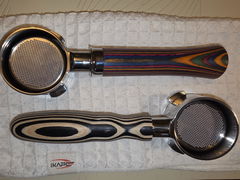
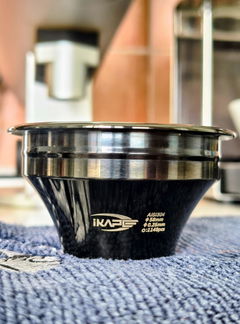
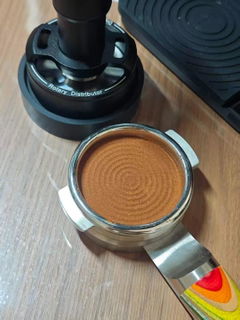
IKAPE Openwork Bottomless Portafilter with High Extraction Precision Basket
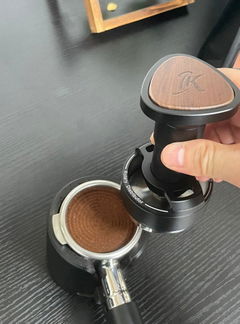
IKAPE All-in-One Coffee Distributor and Tamper Combo - UniPress


6 produkte
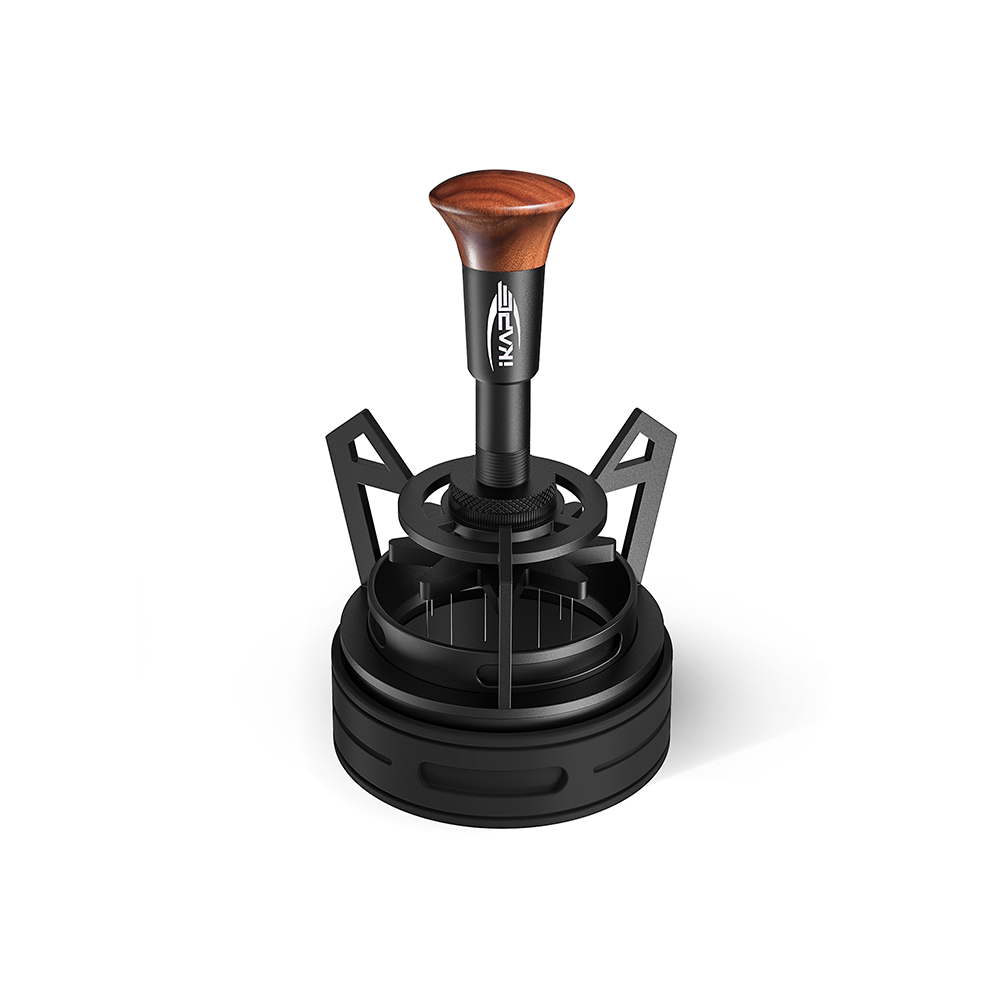
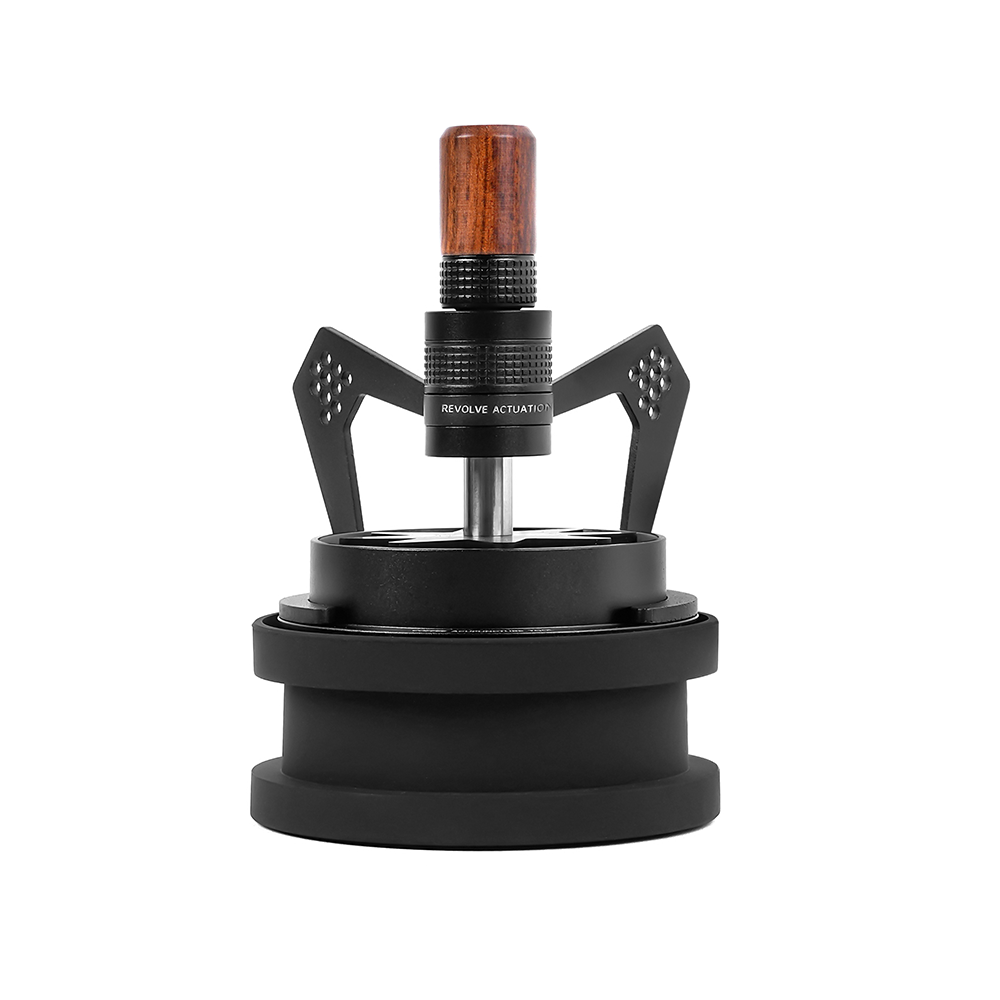
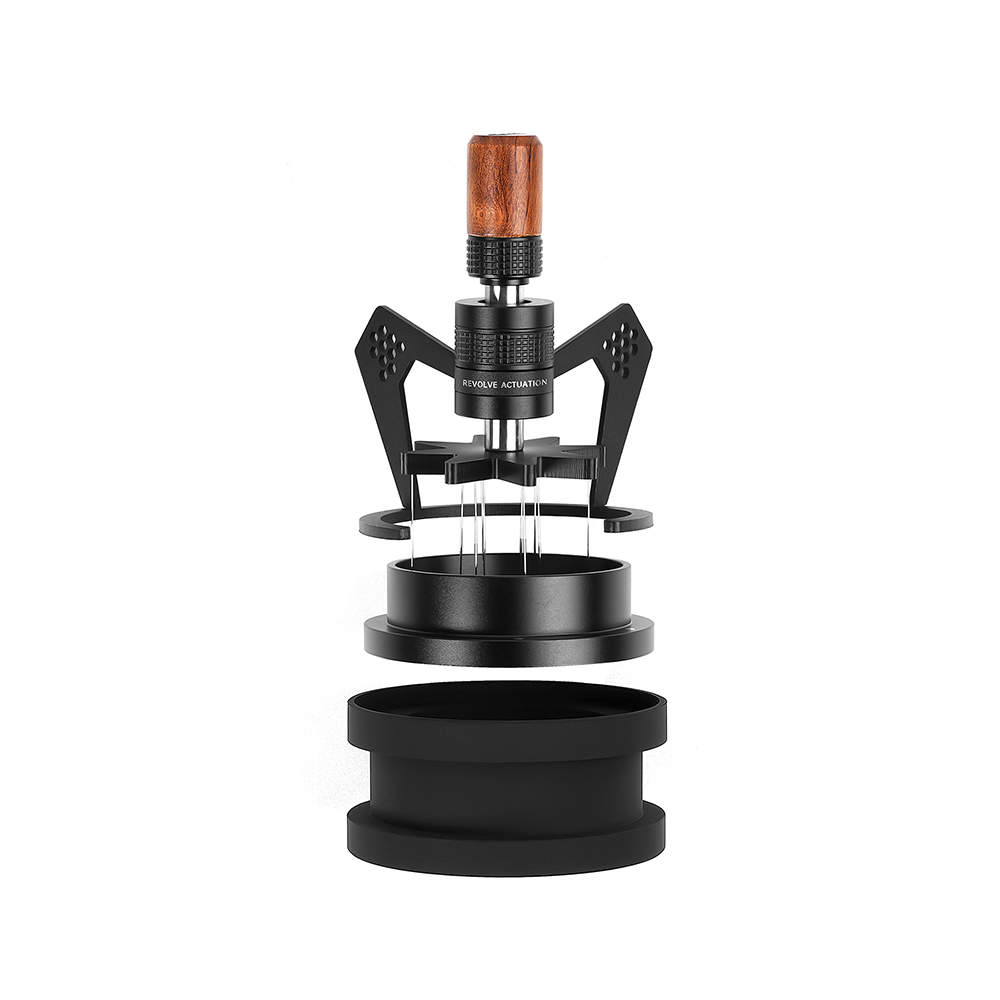
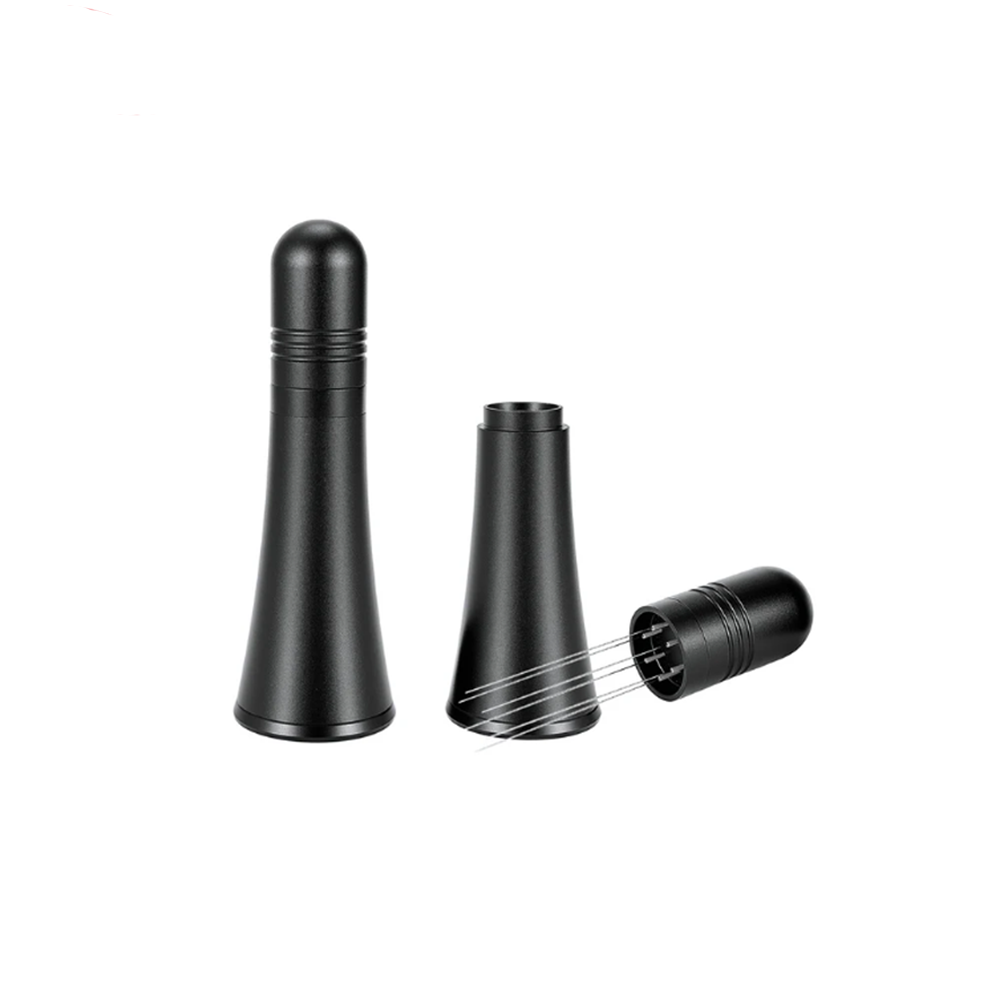
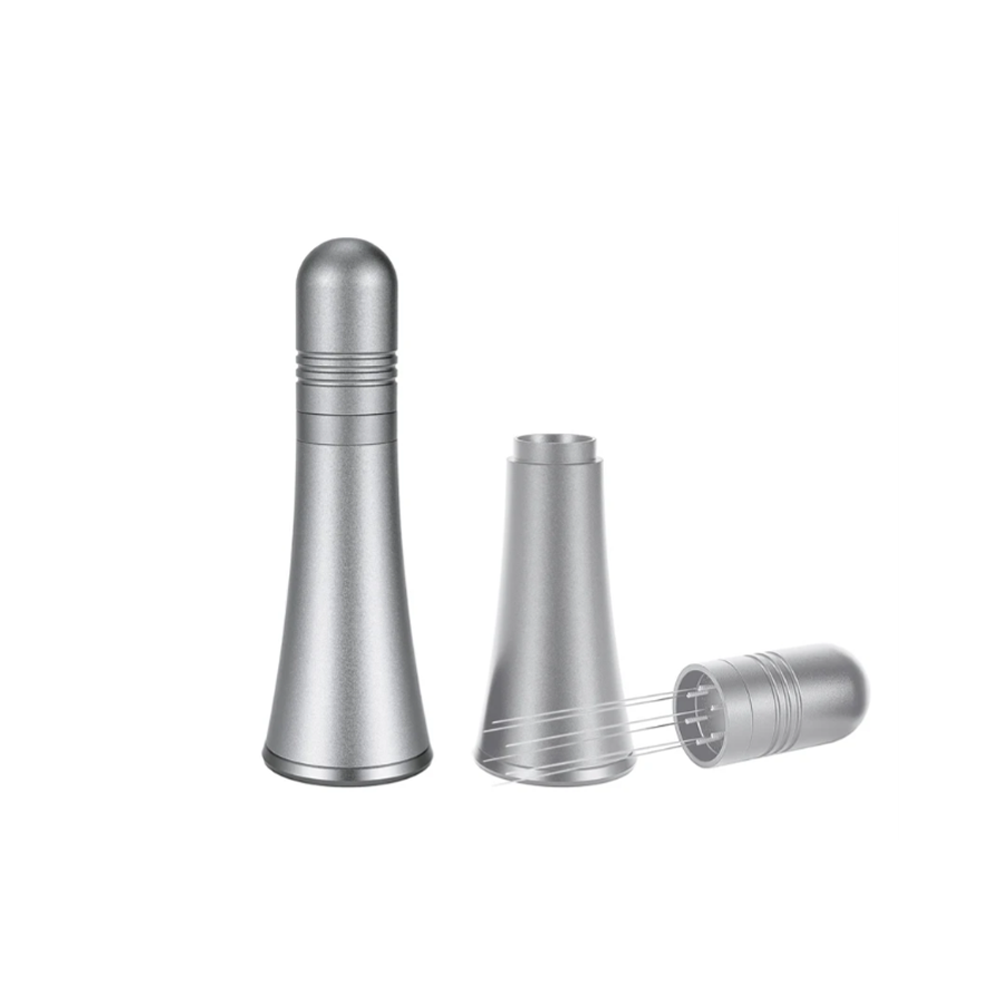
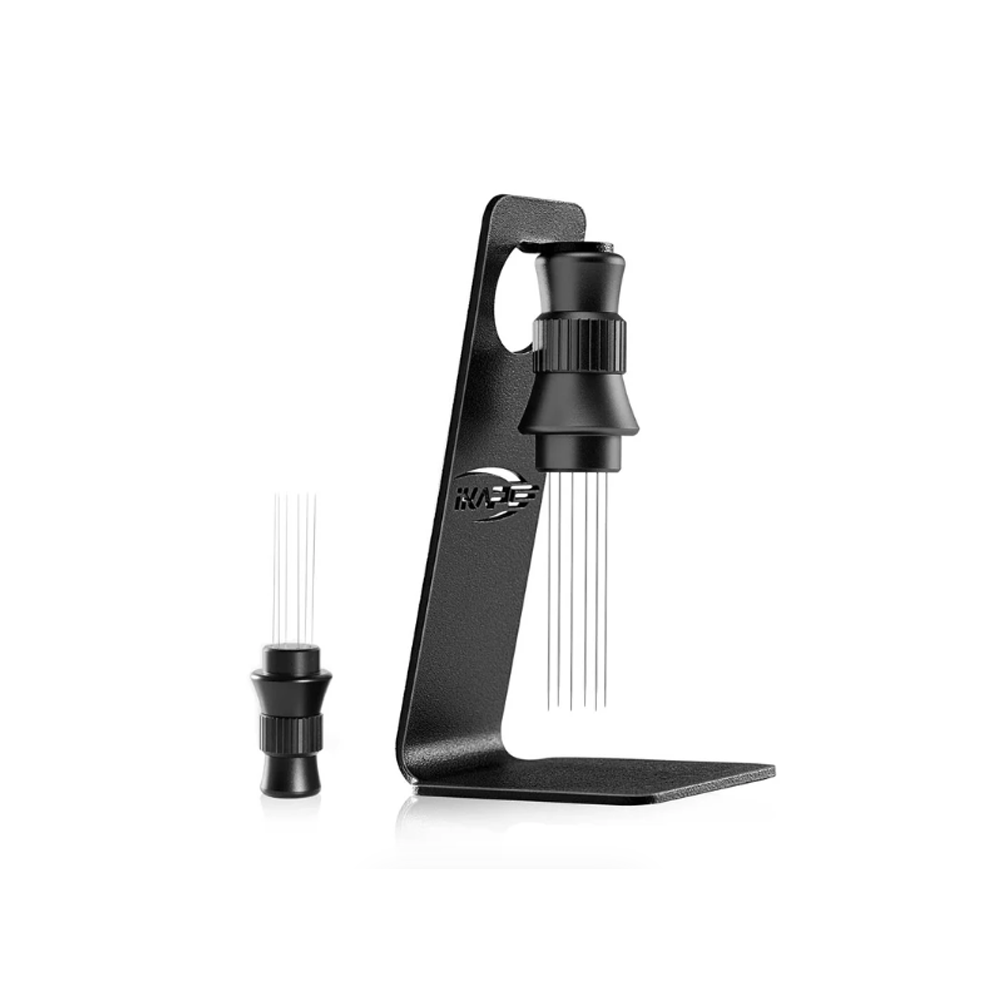
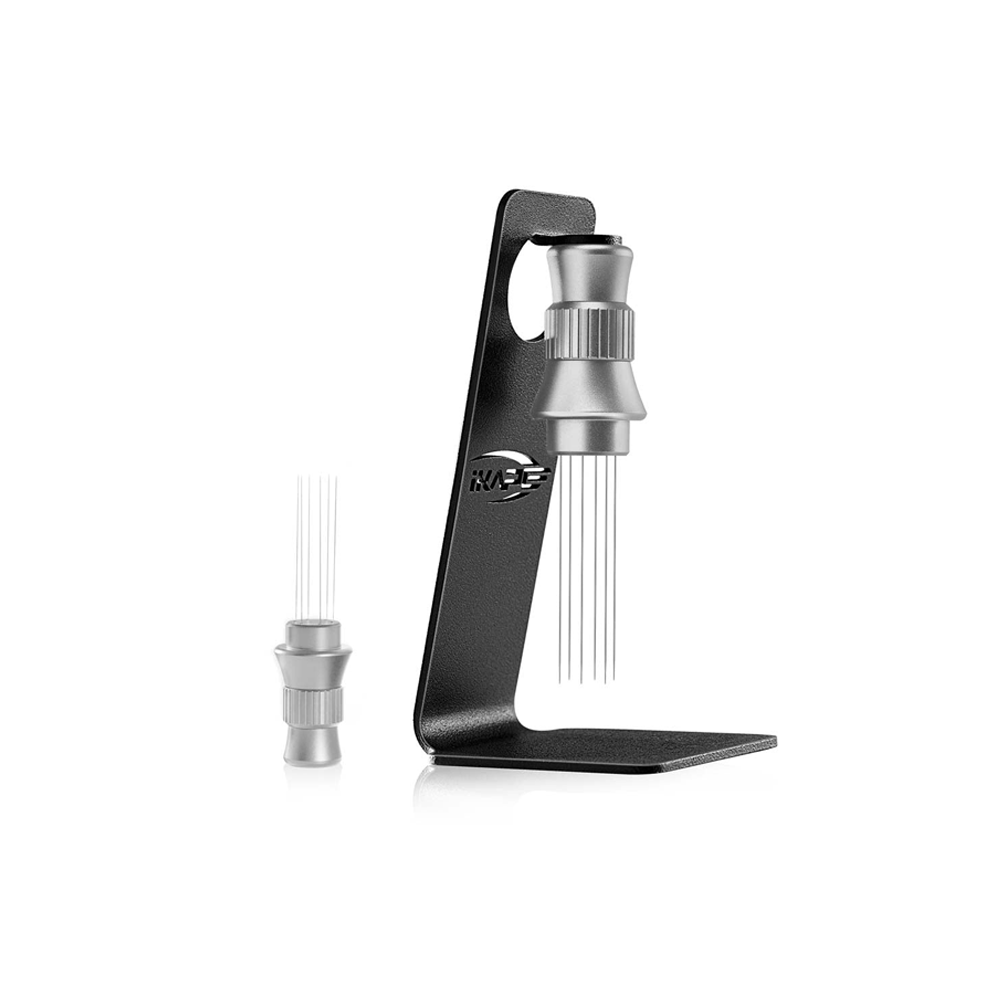


A WDT tool works by moving thin needles through the coffee grounds inside the espresso basket.
The needles break up clumps and redistribute grounds from denser areas into less dense areas. This helps create a more uniform coffee bed before tamping.
Step 1: Dose the Coffee -- Grind the desired dose directly into the portafilter basket. At this stage, the coffee may contain visible clumps or uneven piles.
Step 2: Insert the WDT Needles -- Place the WDT needles into the coffee bed. For deep distribution, the needles should reach through most of the coffee bed rather than only touching the surface.
Step 3: Stir or Rotate -- Depending on the tool design, use: Manual circular motions / Vertical stirring / Rotary movement / Springback or press-and-spin action. The goal is to redistribute the grounds without aggressively compressing them.
Step 4: Level the Surface -- After WDT, gently finish the surface so the coffee bed is relatively level
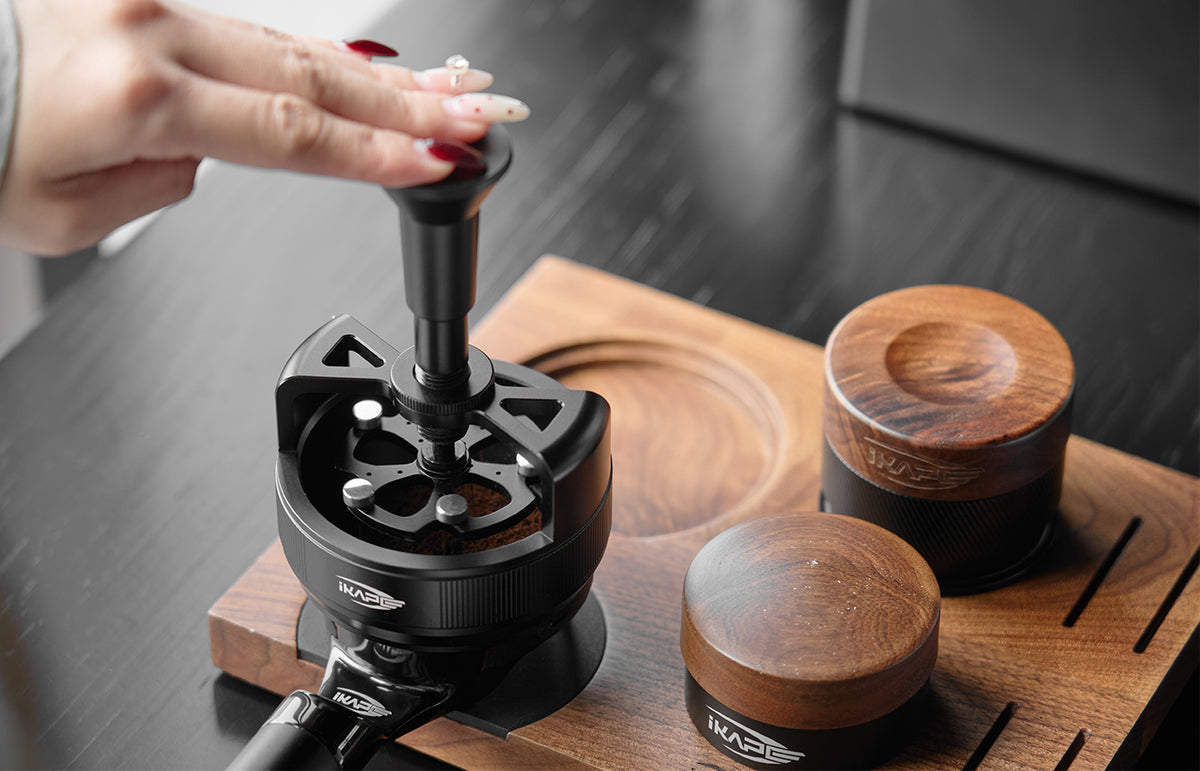
Handheld WDT Tools
Handheld WDT tools give the user full control over stirring depth, pattern, and speed.
Best for:Users who want maximum manual control, Beginners learning WDT technique, Users who prefer a simple and affordable tool
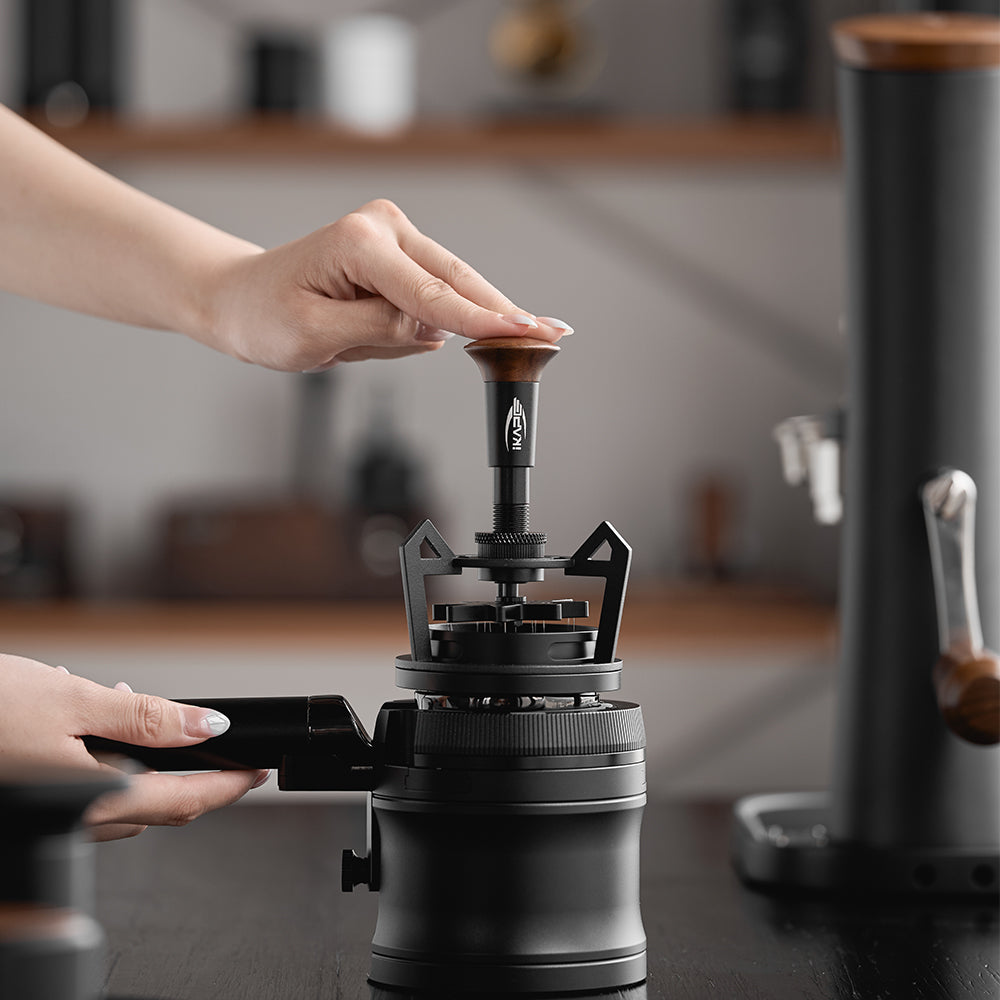
Rotary WDT Tools
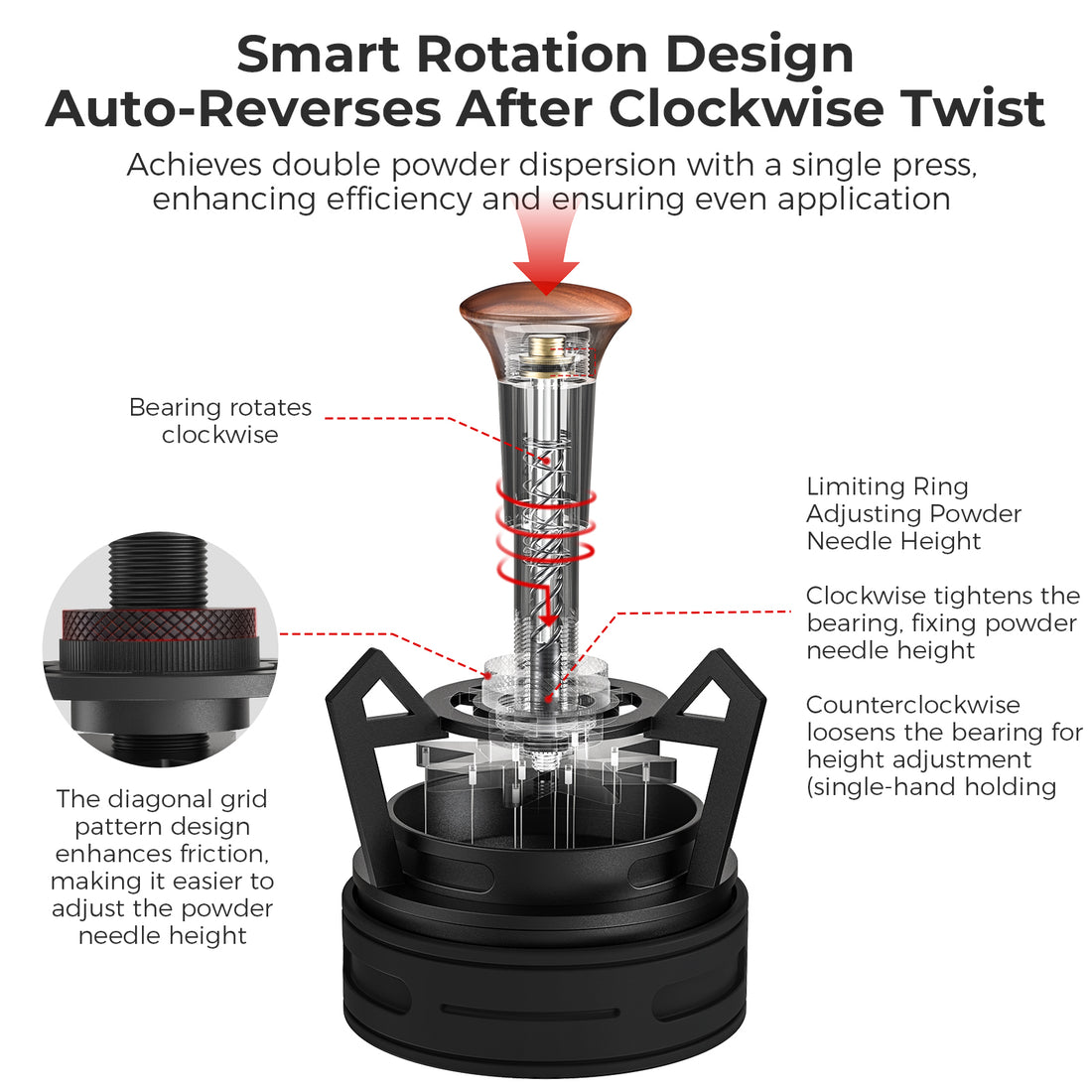
Rotary WDT tools use a structured needle pattern and rotational movement to distribute coffee more consistently across the basket.
Compared with random manual stirring, the rotary design provides a more repeatable movement path.
Best for: Users who want faster preparation, Baristas seeking repeatable motion, Users who prefer less manual stirring
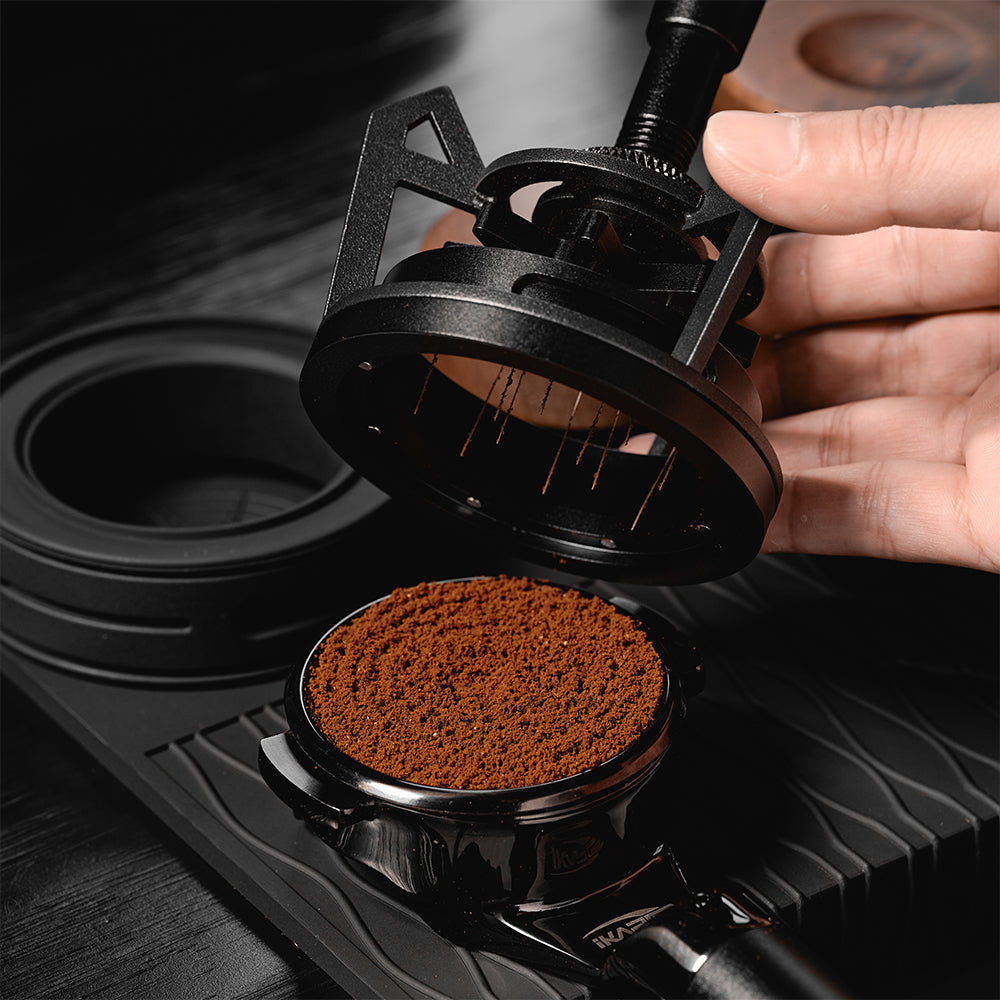
Espresso WDT Tool -- The WDT (Whipped Coffee Buddy) tool's main function is to break up clumps and redistribute coffee grounds. It uses a needle-like tool to contact the coffee grounds inside the basket and is used before tamping.
Coffee Distributor -- The coffee grounds distributor's main function is to level and shape the coffee grounds. It uses a non-standard leveling base to smooth the coffee grounds surface. It is used after the WDT tool and before tamping.
Some users prefer:
WDT → Distributor → Tamper
while others use:
WDT → Tamp
The best workflow
WDT stands for Weiss Distribution Technique.
It is a puck preparation method in which thin needles are moved through freshly ground coffee inside the portafilter basket to break up clumps and redistribute the grounds.
The technique is commonly used before tamping, especially when the grinder produces visible clumps or uneven coffee distribution.
A typical workflow is:
Grind → WDT → Optional Distributor → Tamp → Extract
A WDT tool can help improve espresso consistency when uneven coffee distribution is contributing to inconsistent puck preparation.
By breaking up clumps and redistributing the grounds more evenly throughout the basket, WDT can help create a more uniform coffee bed before tamping.
This may support:
However, WDT is only one part of espresso preparation. Grind size, dose, basket, tamping, coffee freshness, water temperature, and brewing parameters also affect extraction.
WDT can help reduce puck-preparation inconsistencies that may contribute to channeling, especially when clumps or uneven coffee density are present in the basket.
Channeling occurs when water finds areas of lower resistance and flows through them more quickly than through the rest of the puck.
WDT can help by improving internal coffee distribution before tamping, but it cannot guarantee that channeling will never occur.
Other causes of channeling may include:
For this reason, WDT should be considered one part of a complete puck preparation process.
Yes. WDT is normally used before tamping.
The recommended sequence is:
WDT prepares the internal structure of the coffee bed, while tamping compresses the grounds into a stable puck.
WDT is generally used before a coffee distributor.
The two tools perform different functions:
A common workflow is:
Grind → WDT → Distributor → Tamp → Extract
However, some users prefer:
Grind → WDT → Tamp → Extract
Whether a separate distributor is needed depends on the grinder, basket, dose, and personal workflow.
There is no universal number of rotations required for every espresso setup.
The goal is to redistribute the coffee evenly rather than complete a fixed number of turns.
For rotary WDT tools, a few smooth rotations are often enough to move the needles through the coffee bed and reduce visible unevenness.
Excessive stirring is usually unnecessary and may slow the workflow.
The best approach is to stop once:
Thin needles are generally preferred because they can move through coffee grounds with less resistance and are less likely to push large sections of coffee around the basket.
Several IKAPE WDT tools use 0.25mm ultra-fine needles, which are designed to provide a fine, low-resistance stirring action.
When comparing WDT tools, consider more than needle thickness alone.
Other important factors include:
A well-designed needle arrangement is just as important as diameter.
The sweet spot is between 0.25mm and 0.4mm. Any needle thicker than 0.4mm will actually push the coffee grounds around and compress them, creating more clumps rather than breaking them. IKAPE WDT tools utilize ultra-thin, medical-grade stainless steel needles to effortlessly fluff and homogenize the grounds.
Insert the needles gently to the very bottom of the basket, make smooth circular motions from the bottom upward, and slowly spiral out toward the top.
When using the Rotary WDT Distribution Tool, first adjust the pins to a height suitable for your portafilter basket. Gently press down 2–3 times. After pressing, lightly tap the portafilter on the silicone mat to level out the fluffy coffee grounds. This prevents the grounds from spilling when you remove the WDT tool.
Yes, absolutely! We understand that ultra-fine needles can accidentally bend over extended periods of daily use. We generously include a complete set of replacement needles in every package.
Some IKAPE WDT tools feature a simple nut screw connection design for easy pin replacement.Other versions require a tool to pull out bent pins. For detailed operation tutorials, feel free to contact our customer support.