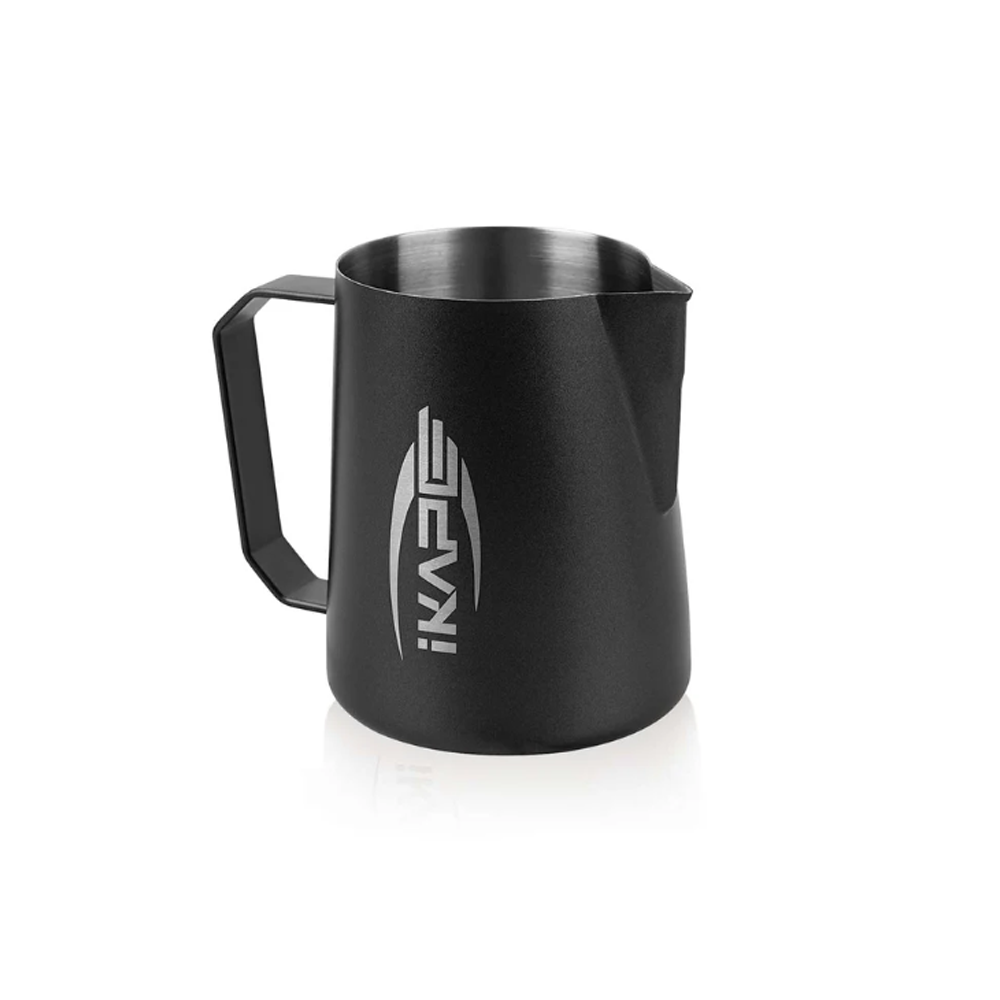
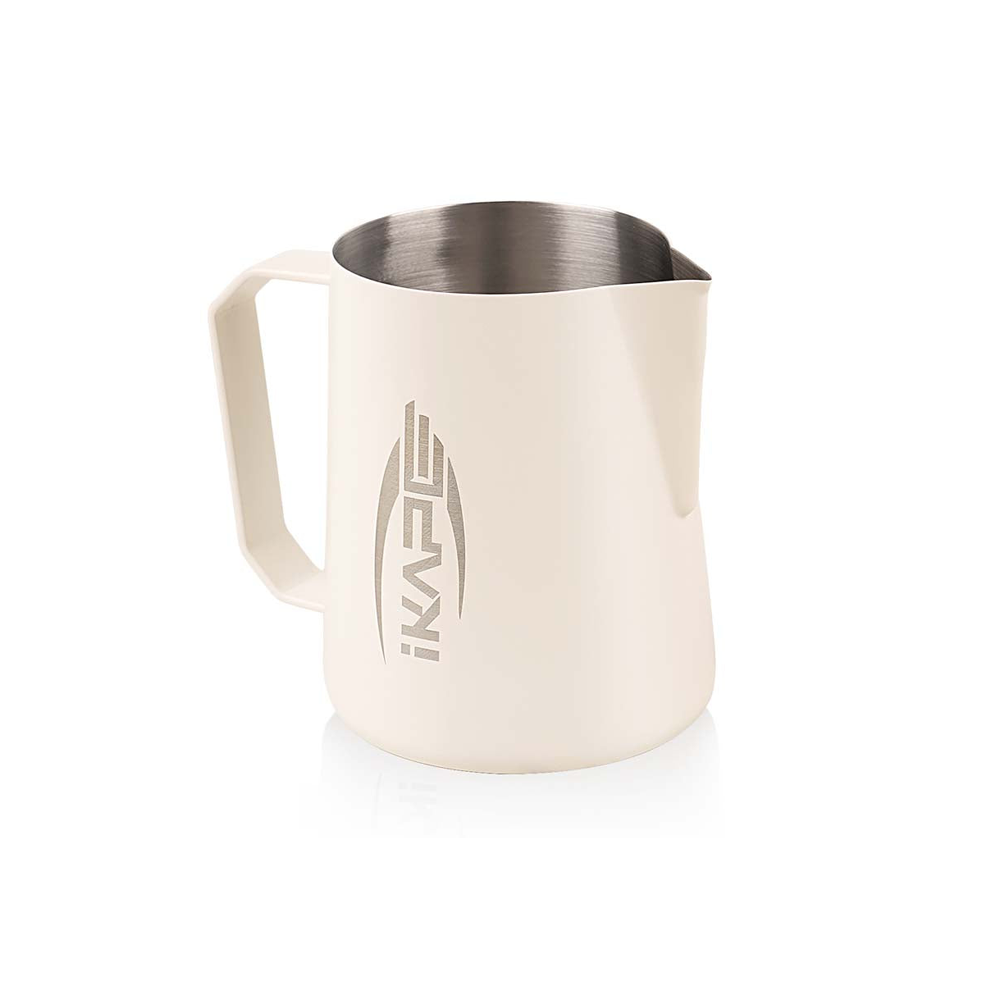
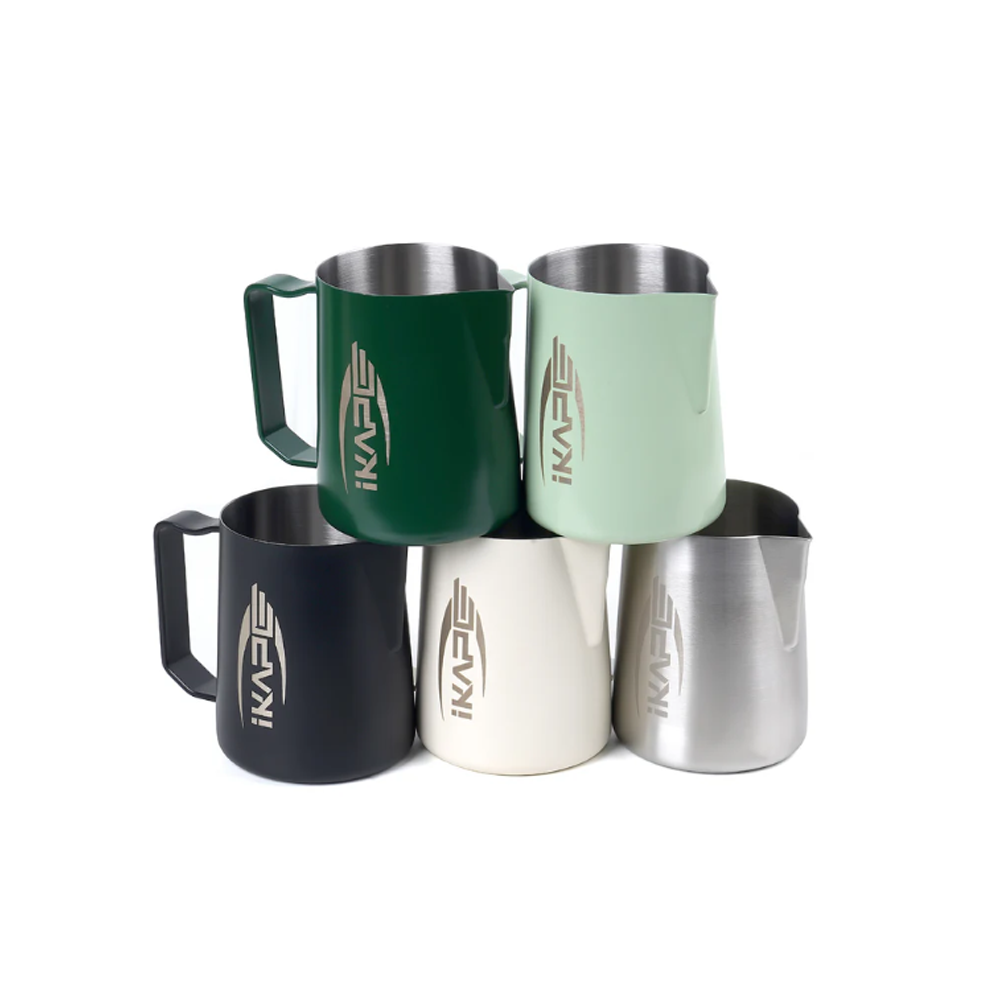
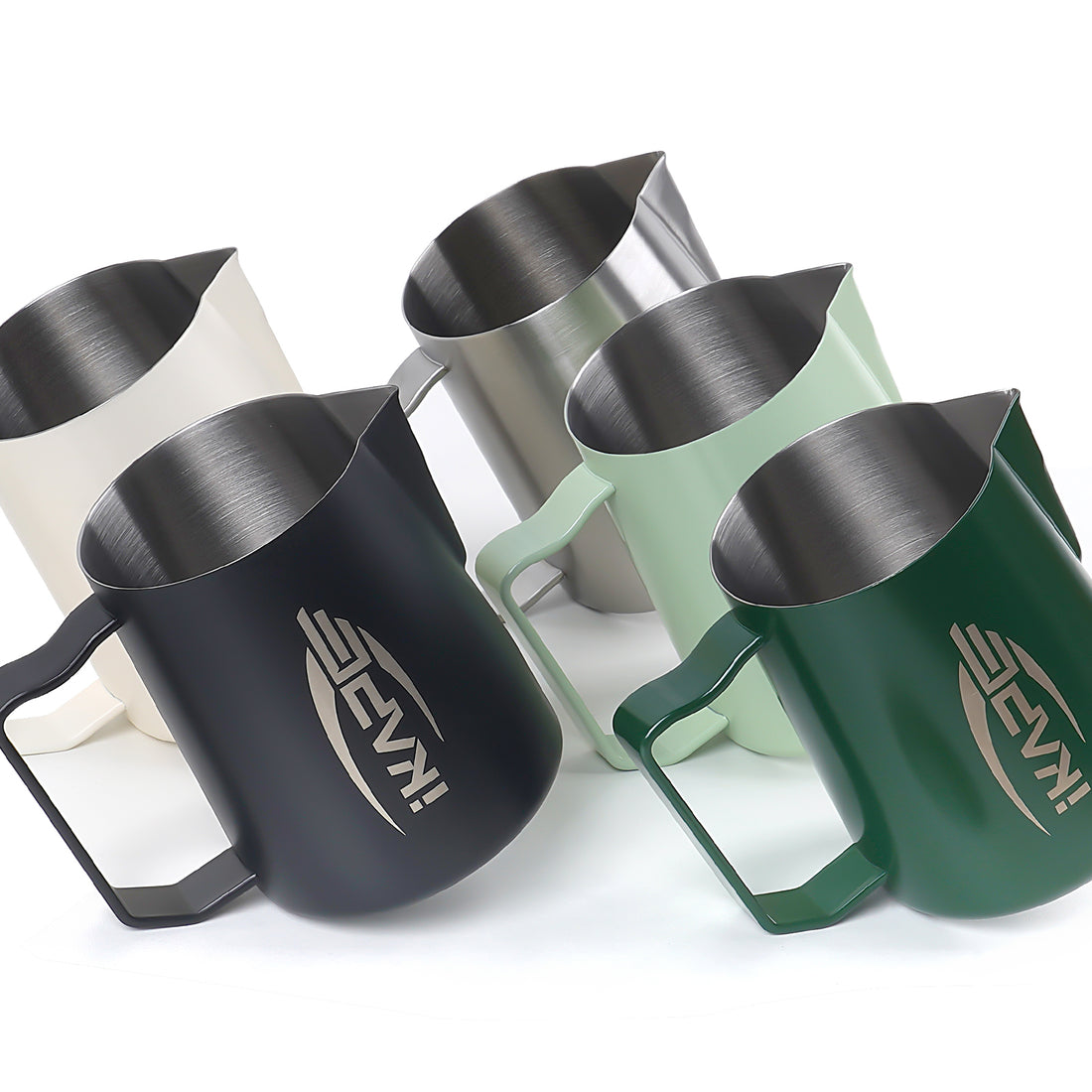
Collection: Milk Frothing Pitchers for Latte Art & Espresso

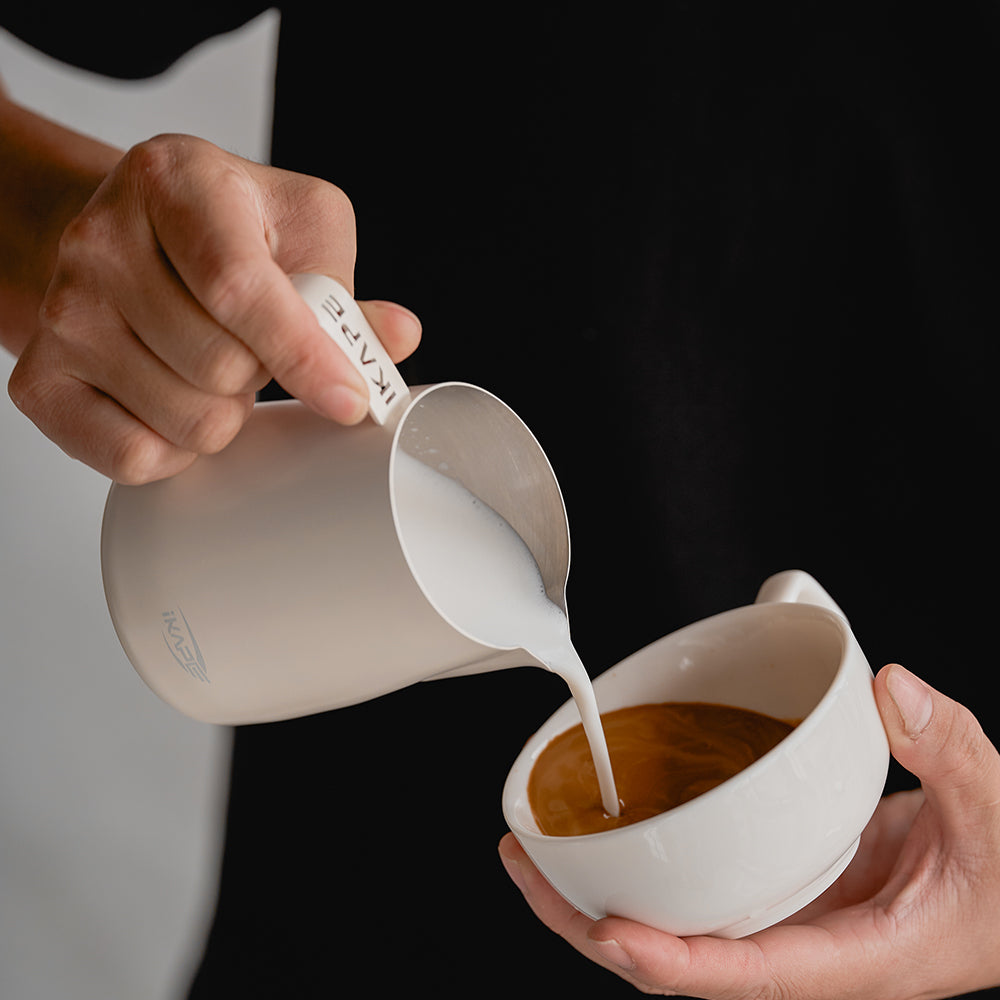
A well-designed milk frothing pitcher gives baristas better control over milk steaming, microfoam texture, and latte art pouring. From the shape of the spout to the balance of the handle and body, every detail can affect how comfortably and precisely steamed milk is poured.

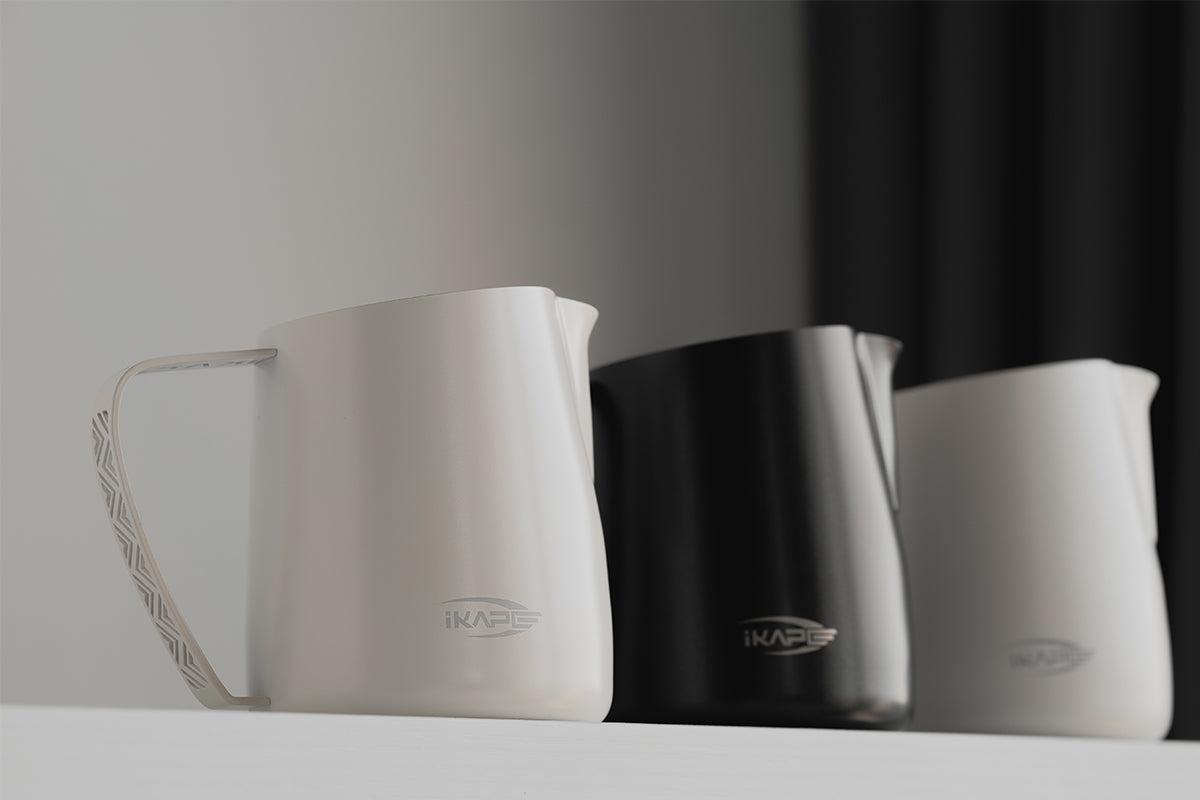
IKAPE milk pitchers are designed for home baristas and professionals who want greater control during steaming and latte art. Explore handled and handleless designs, precision spouts, multiple capacities, and stainless steel constructions for different drinks, pouring techniques, and skill levels.

Whether you are learning your first heart or refining detailed rosettas and swans, choosing the right latte art pitcher can make milk preparation more comfortable and repeatable.

Sort by
Filter and sort
Filter and sort

6 products

6 products

What Is a Milk Frothing Pitcher?

A milk frothing pitcher, also called a milk steaming pitcher or latte art pitcher, is a barista tool used to steam, texture, and pour milk for espresso-based drinks such as lattes, cappuccinos, and flat whites.

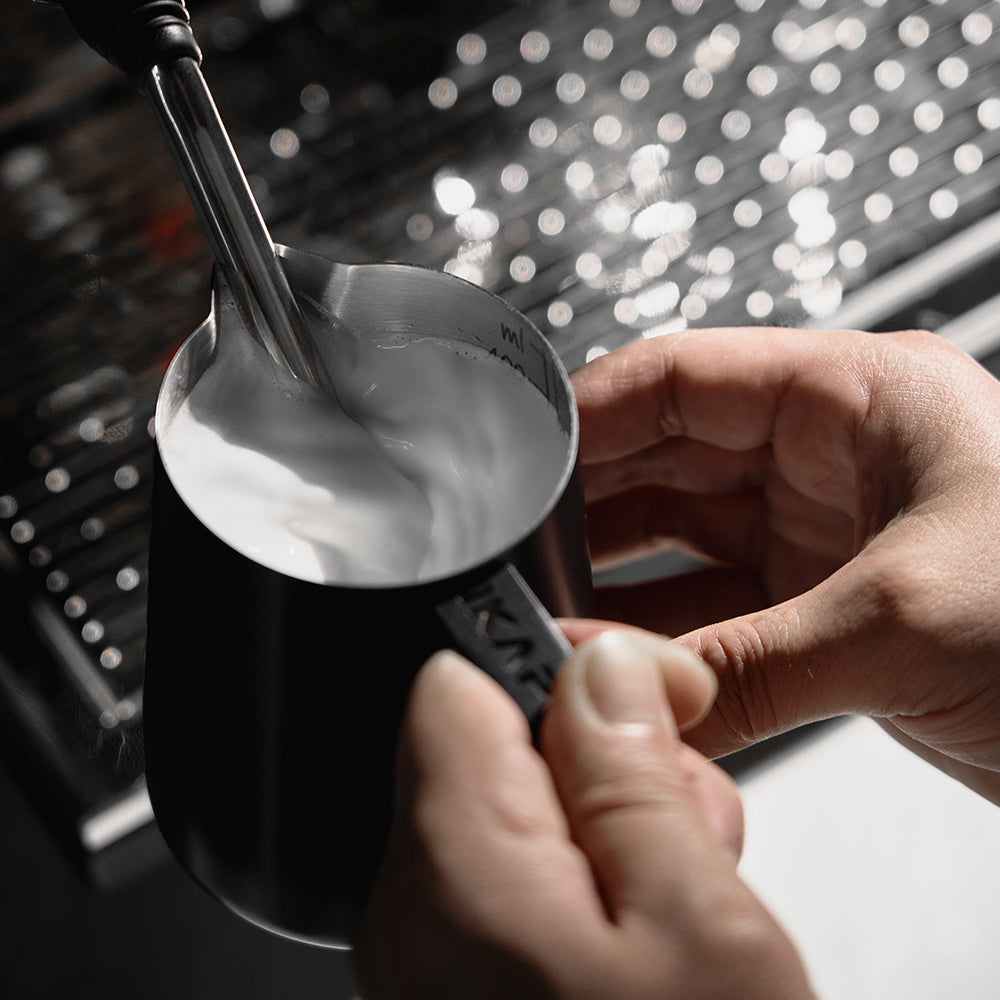
The pitcher provides space for milk to expand while steaming and helps the barista control the movement of milk around the steam wand. Its body shape, capacity, handle, and spout can all influence steaming comfort and pouring precision.

Unlike a regular serving jug, a latte art pitcher is designed specifically for milk texturing and controlled pouring.

Milk_Frothing_Pitcher_V3

How Does a Milk Frothing Pitcher Affect Latte Art?

The design of a milk pitcher affects both milk steaming and pouring control.

Spout Shape -- A sharper spout can help produce a narrower, more controlled stream for detailed latte art.

A rounder spout generally produces a wider and softer flow, which can be easier for larger hearts and simple tulips.

Pitcher Shape -- The internal shape influences how easily milk circulates while steaming.

A smooth milk vortex helps combine air and liquid milk into fine microfoam.

Capacity -- The pitcher must provide enough space for milk expansion while still allowing good steam-wand control.

Handle and Balance -- Handle shape and weight distribution affect wrist position, pouring angle, and control during latte art.

Sharp Spout vs Round Spout Milk Pitcher

A sharp-spout milk pitcher is designed for users who want finer control over the milk stream, particularly when creating detailed latte art.

A rounder spout creates a wider flow and can be easier to control when learning basic patterns.

Neither is universally better—the right choice depends on pouring style and the patterns you want to create

FAQs

What Size Milk Pitcher Should I Choose?

Choosing the right milk pitcher size depends mainly on the amount of milk you normally steam at one time.

350ml / 12oz Milk Pitcher

Best suited for: Cortados, Flat whites, Small cappuccinos, Single smaller drinks, Smaller pitchers provide good control when steaming relatively small amounts of milk.

450–500ml / 15–17oz Milk Pitcher

A versatile option for: Standard lattes, Cappuccinos, Most home espresso setups
This size offers a good balance between milk capacity and pouring control.

600ml / 20oz Milk Pitcher

Suitable for: Larger lattes, Preparing more milk at once, Higher-volume workflows, Users who prefer more steaming space

Important

Do not fill a milk pitcher to the top before steaming. Milk needs room to circulate and expand as air is incorporated.


What is the best milk pitcher size for latte art?

There is no single best size for every latte art setup.

The ideal size depends on:

  • Cup size
  • Milk volume
  • Steam power
  • Pouring technique
  • Personal preference

A smaller pitcher can offer more control when preparing a single smaller drink, while a medium-sized pitcher provides more versatility.

Larger pitchers may be useful for higher milk volumes, but they can be harder to control when only a small amount of milk is being steamed.

For latte art, matching pitcher size to the amount of milk you actually use is more important than choosing the largest capacity.

Is a handleless milk pitcher better for latte art?

A handleless milk pitcher is not automatically better, but some baristas prefer it because it allows direct contact with the pitcher body and can provide a more immediate sense of balance and pouring angle.

A handleless design may appeal to users who want:

  • More direct grip
  • Better center-of-gravity feedback
  • Greater freedom in hand positioning
  • A compact pouring style

Traditional handled pitchers may be more comfortable for users who prefer:

  • A familiar grip
  • Better separation from the heated pitcher body
  • More consistent hand placement

The best option depends on personal pouring technique.

How much milk should I put in a frothing pitcher?

The pitcher should not be filled to the top before steaming.

Milk needs enough space to:

  • Circulate around the steam wand
  • Form a stable vortex
  • Expand as air is incorporated
  • Avoid overflowing

The correct starting amount depends on the pitcher size, drink size, and milk type.

A practical approach is to use only the amount of milk needed for the drink while leaving sufficient expansion space above the milk.

Avoid using an unnecessarily large pitcher for a very small amount of milk, as this can make steaming more difficult to control.

Can I use a large pitcher for a small amount of milk?

Yes, but it is usually not ideal.

When the pitcher is much larger than the milk volume, it may be harder to:

  • Position the steam wand correctly
  • Create a stable vortex
  • Monitor temperature
  • Control milk texture

For example, steaming a very small amount of milk in a large 600ml pitcher may be less convenient than using a smaller pitcher.

Matching pitcher size to the amount of milk you regularly steam generally gives better control.

Do I need a special milk pitcher for latte art?

You do not need an expensive or highly specialized pitcher to begin learning latte art, but a properly designed milk frothing pitcher can make pouring easier.

Useful features include:

  • A controlled spout
  • Comfortable balance
  • Appropriate capacity
  • A stable body shape
  • Stainless steel construction

As your technique improves, you may prefer a specific spout or handle design that matches your pouring style.

Beginners should focus first on milk texture and flow control before choosing highly specialized latte art shapes.

How do I clean a milk frothing pitcher?

Clean the pitcher soon after each use.

Recommended steps:

  1. Rinse out remaining milk.
  2. Wash the inside and outside with warm water and mild detergent.
  3. Remove any milk residue around the spout.
  4. Rinse thoroughly.
  5. Dry before storing.

Do not allow milk residue to dry inside the pitcher, as it can become harder to remove and may affect hygiene.

For coated or specially finished pitchers, follow the care instructions for that specific model.

Can IKAPE milk pitchers go in the dishwasher?

No, Hand washing is generally the safest option for preserving the appearance and finish of specialty latte art pitchers.

Should I choose a Sharp Spout or a Round Spout milk pitcher for latte art?

It depends on your preferred latte art patterns. Choose a round spout (like our Classic series) if you enjoy pouring traditional, bold, and flowing patterns such as hearts, tulips, and thick rosettas. Choose a sharp spout (like our Precision series) if you want to execute high-definition, complex designs requiring fine-line control, like swans, multi-tiered roses, or advanced comb patterns.

What is the benefit of using a handleless milk pitcher with a silicone sleeve?

Handleless pitchers allow baristas to wrap their hand directly around the metal body, providing a more intimate grip and a clearer sensation of the pitcher's center of gravity and pouring pivot point. Many professionals find this significantly increases pouring accuracy for complex latte art. The thick, textured silicone sleeve protects your hands from being scalded by hot milk temperatures.

How do I choose the correct milk pitcher size (350ml / 450ml / 500ml / 600ml)?

Choose based on your serving size and machine steam power. Our 12oz (350ml) pitcher is perfect for single-serve flat whites, cortados, or small macchiatos (requires 3-6oz of milk). The 20oz (600ml) pitcher is the ideal industry standard for pouring larger lattes and cappuccinos, or for frothing enough milk to prep two drinks simultaneously. Intermediate sizes like 450ml / 500ml offer an excellent balance for medium-sized cups.

How to Clean the IKAPE Milk Pitcher?

To preserve the pristine matte look, Teflon non-stick properties, or electroplated finishes, we strongly recommend hand washing with a soft sponge. Aggressive dishwasher detergents combined with high-heat drying cycles can degrade, peel, or scratch the external aesthetic coating over time.