






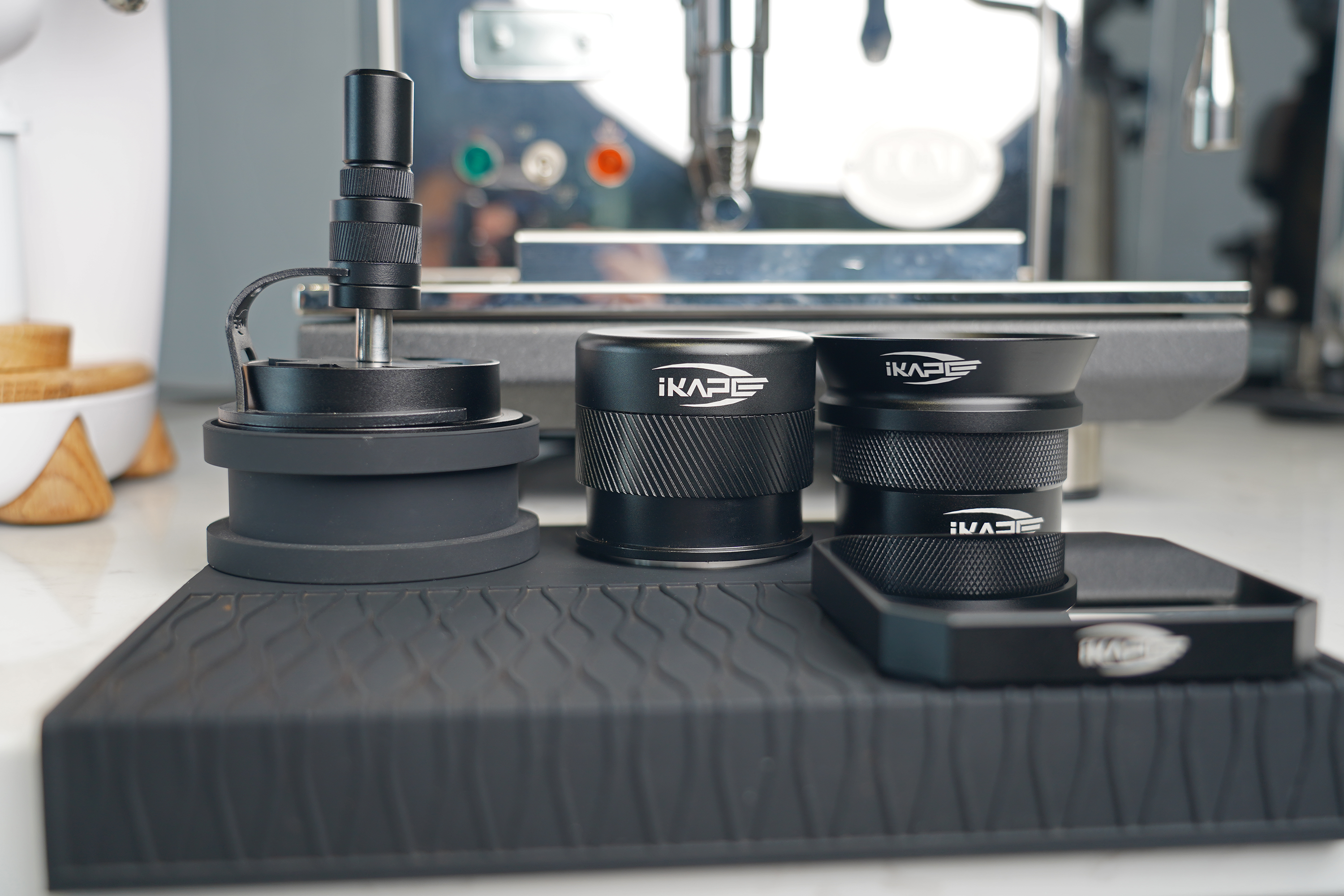
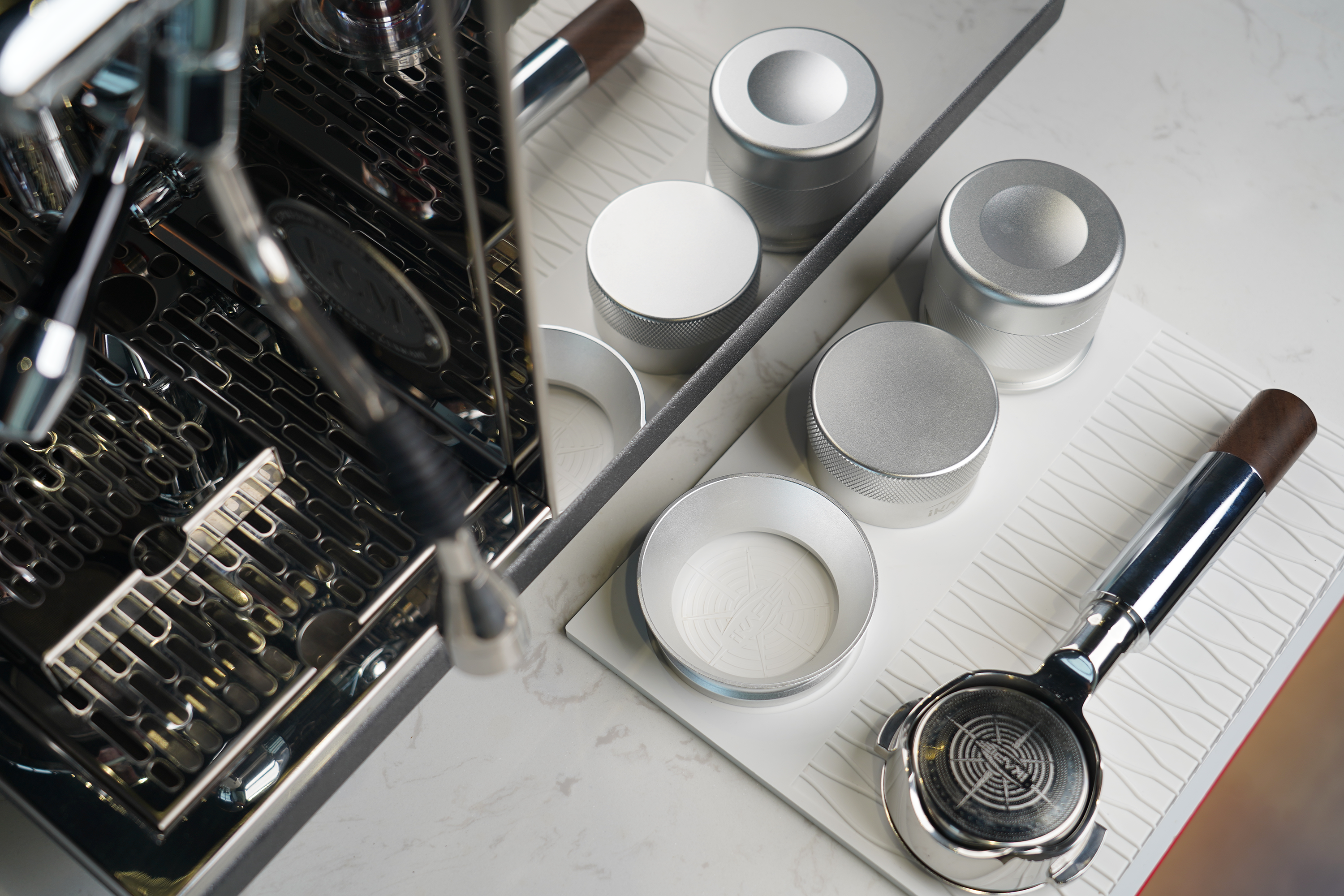
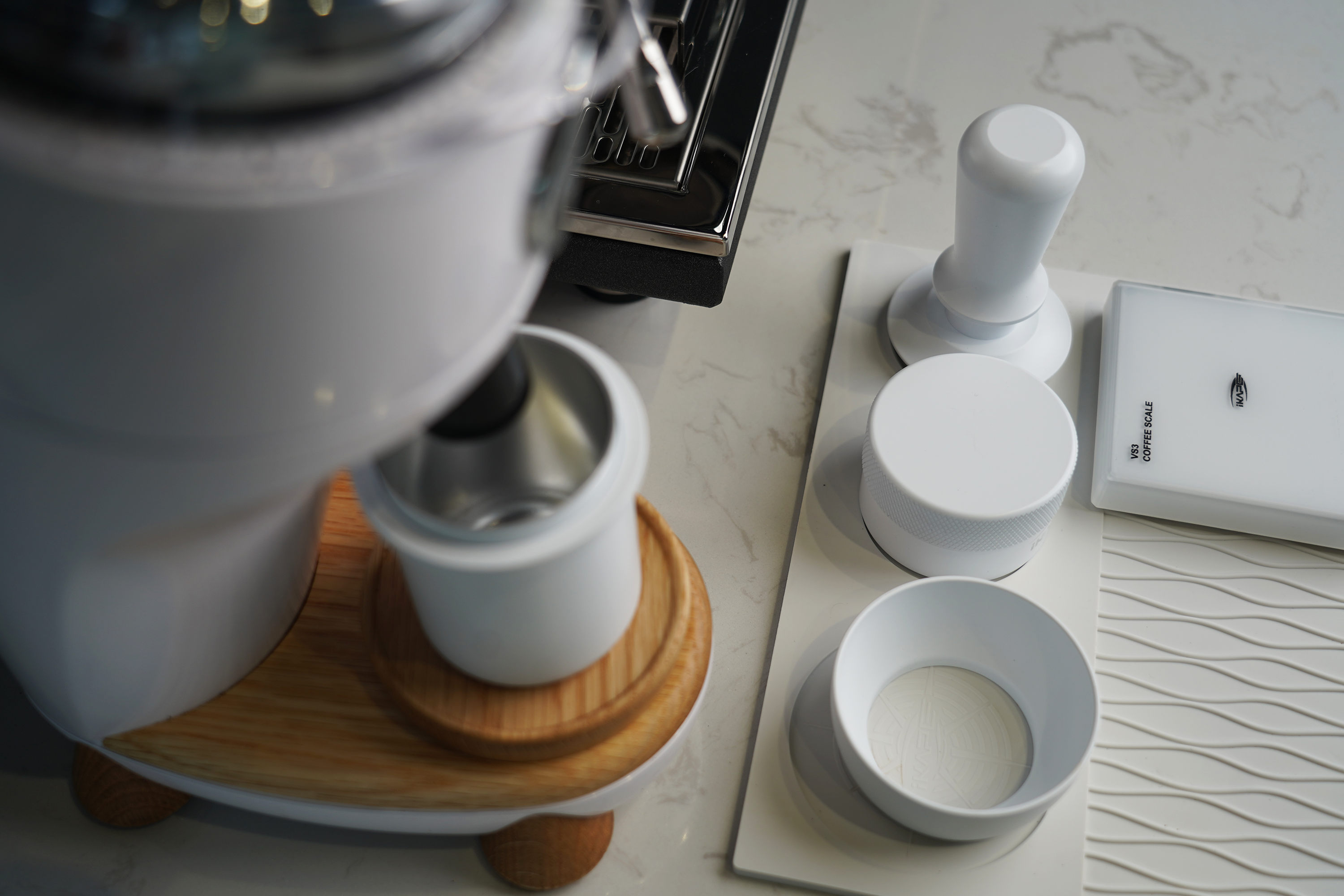
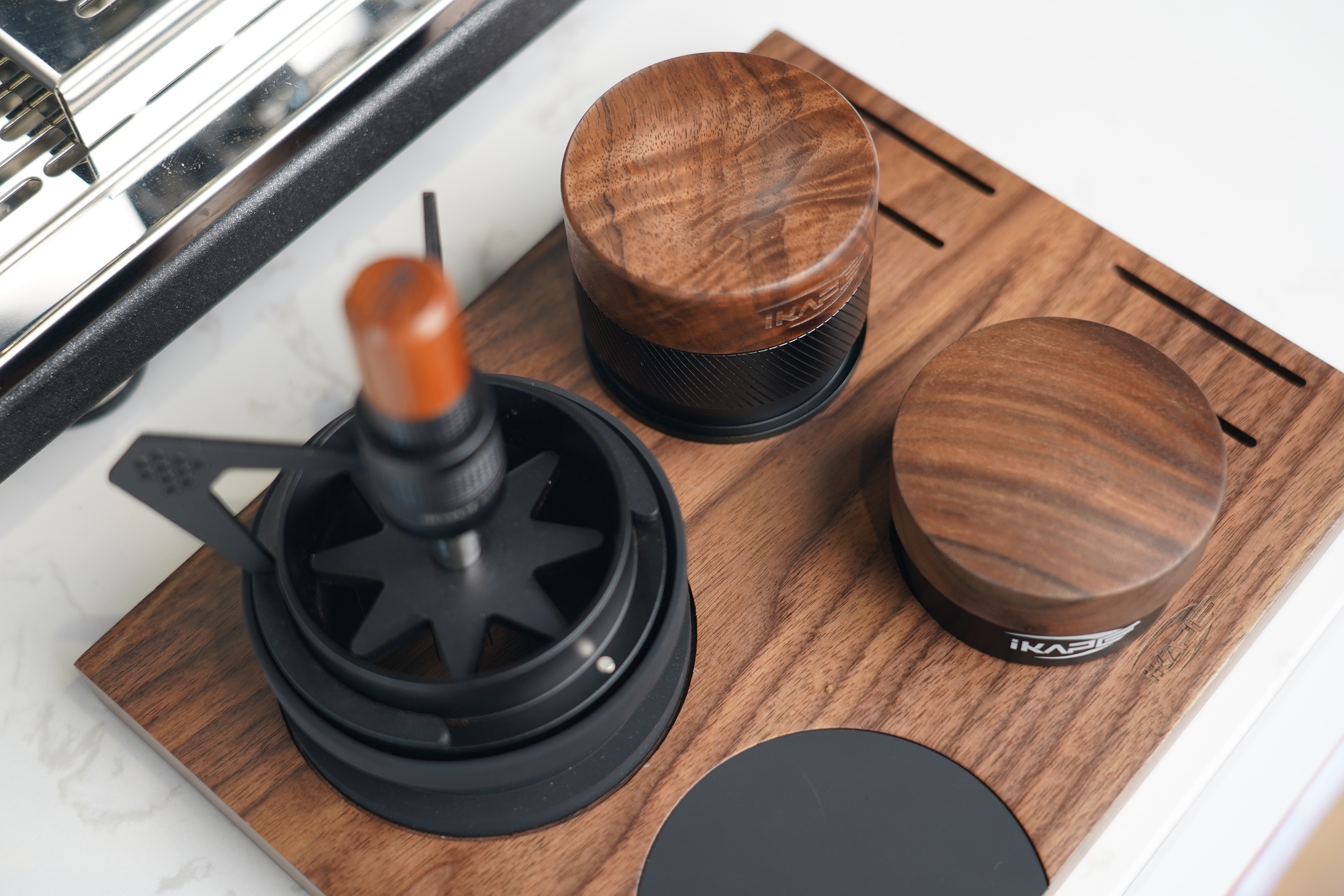
Overall - I really like this tapered portafilter design (thanks Lance Hendrick!) and this design has provided margin back into my brewing as the puck depth is so forgiving. I tend to brew medium roasts and enjoy 18-20g dose with a top screen, so I opted to purchase the 38mm depth after-the-fact and love that basket. Either of these two tapered baskets have been my daily basket since purchase and am overall very satisfied with them.
My only qualm, is that the rim shape does not seat nicely on my ECM bottomless portafilter handle, and it ends up sitting taller than other brand baskets (so it barely locks into my Synchronika's group head). Not a huge deal, but should be noted.
I’m loving this basket, it’s quickly becoming my everyday basket.
Ordered for the wood box I have and doesn’t fit. Description should be much better to avoid this
great coffee tamper. got perfect shots
IKAPE Variable Diameter Espresso Portafilter Basket 58mm or 54mm to 32mm